
Tummy Tuck

Tummy Tucks At A Glance
A tummy tuck (abdominoplasty) eliminates excess skin and fat from the abdominal area and tightens the muscles in that region, producing a slim, trim appearance.
Types of tummy tucks include full tummy tuck, mini tummy tuck and core tummy tuck (restores core strength, especially for athletes). Fleur-de-Lys tummy tucks are people who have had massive weight loss.
Best time to get a tummy tuck: when you are at your normal weight, finished having children and in good health.
Typical recovery: resume light tasks and office-type work in 10 to 14 days. Normal exercise, sports and strenuous labor usually at four weeks.
Performed under general anesthesia, outpatient, typically 2–4 hours.
Average cost (all-inclusive for surgeon’s fee, operating room, anesthesiology fee, pre- and post- appointments and garment): $12,400 - $13,400 for full tummy tuck; $7,800–$8,000 for mini tummy tuck; and $14,000 - $15,200 for core tummy tuck. Fleur-de-Lys is a highly specialized procedure and pricing is provided at your consultation.
Designer Tummy Tucks by Sheldon Lincenberg, MD
Most women want a tummy tuck to restore their pre-pregnancy figure or to remove extra skin from the belly area because they have lost weight. Diet and exercise help with weight loss, but it doesn’t remove the extra skin.
Tummy tucks (abdominoplasty) offered in the Atlanta area by Sheldon Lincenberg, MD, a Mayo Clinic-trained, double board-certified plastic surgeon, are known as “designer tummy tucks” because each patient’s surgical plan for their tummy tuck is highly customized. Dr. Lincenberg will remove excess fat and skin, and tighten up the underlying muscle, resulting in a flatter, firmer, tighter stomach and a thinner waist. He does more or less of each of those based on what your abdomen needs.
Dr. Lincenberg is also known for his extensive experience in After Weight Loss Surgery which includes multiple torso surgical contouring procedures for massive weight loss patients.
To get started, schedule a consultation with Dr. Lincenberg. Tell him what your goals are for a tummy tuck so he can recommend a customized surgery plan for you.
What is a Tummy Tuck?
A tummy tuck (abdominoplasty) is a cosmetic procedure that removes excess fat and skin and tightens up the underlying muscle, resulting in a flatter, firmer, tighter stomach and a thinner waist.
Four techniques are used in a tummy tuck procedure to achieve the desired results:
Loose or sagging skin on the front of the tummy is removed to create a smooth appearance
The fat layer under the skin is thinned using advanced liposuction devices
Muscles that have lost their tightness are stitched together to restore firmness, flatness and strength
The belly button is reshaped so that it resumes a round or egg-shaped, youthful appearance
Dr. Lincenberg will use more or less of each of these techniques on a tummy tuck procedure, so that every patient receives an operation designed especially for their tummy.
What a Tummy Tuck Isn’t
A tummy tuck is not performed for weight loss purposes. However, when you lose weight, only the fat disappears, not skin. Depending on the amount of weight you lost, removing the extra skin can result in weight loss.
Although the results of a tummy tuck are technically permanent, the positive outcome can be greatly diminished by significant fluctuations in weight. For this reason, individuals who are planning substantial weight loss in the future or women who may be considering future pregnancies should postpone a tummy tuck.
A tummy tuck cannot correct stretch marks, although they may be removed or somewhat improved if they are located on the areas of excess skin that will be excised during the tummy tuck procedure.
When Is the Best Time to Get a Tummy Tuck?
Types of Tummy Tuck Procedures
There are several types of tummy tucks. During your consultation appointment, Dr. Lincenberg will help you determine which one is best for you.
Full Tummy Tuck
A full tummy tuck makes changes across the entire abdomen area. It involves using four techniques:
the loose skin is removed,
the fat layer is thinned using advanced liposuction devices,
the muscles are stitched together to restore flatness and strength,
and the belly button is reshaped.
Dr. Lincenberg will create a customized combination of these techniques for each patient.
Mini Tummy Tuck
Mini tummy tucks address only the areas between the belly button and the hips. A mini tummy tuck is generally considered when the loose skin on the tummy is limited to below the navel. Sometimes a mini tummy tuck can be enhanced by adding liposuction of the upper tummy.
A mini tummy tuck would not be considered if there is significant loosening of abdominal muscles from pregnancies or aging. A full tummy tuck would be required in that case.
Core Tummy Tuck
Also known as an augmentation abdominoplasty and typically used for athletes, a core tummy tuck surgically tightens the abdominal wall and repairs separated muscles to restore core strength and flatten the midsection.
The procedure uses a natural silk band to strengthen the fascia connections between core muscles, restoring flatness and strength to the area. The band will disappear on its own in about two years.
Fleur-de-Lys Tummy Tuck
This procedure is similar to a full tummy tuck with the addition of extra skin removal around the waist. A fleur-de-lys tummy tuck uses both a horizontal and a vertical incision to remove extra sagging skin in two directions.
It is a procedure for patients who have lost a huge amount of weight (usually 100 pounds or more) and who have loose, hanging skin both above and below the belly button.
Mini Tummy Tuck vs Full Tummy Tuck
A mini tummy tuck is for tummies that only require improvement between the navel and the hips. Most people choose a full tummy tuck because it makes want changes across the entire abdomen and waist.
The belly button, also known as the navel, is the guide to knowing if a mini or a full tummy tuck is needed to remove the excess skin. A mini tummy tuck is generally considered when the loose skin on the tummy is limited to below the navel. If there is also loose skin on the upper tummy, then a full tummy tuck will be required to achieve the desired appearance.
Fat that is below the navel or on the sides of the tummy is reduced in both operations. When there is extra fat above the navel, a mini tummy tuck can be enhanced by adding liposuction of the upper tummy. At this point, it is almost the same as a full tummy tuck.
Significant loosening of abdominal muscles from pregnancies or aging is a sign that a mini tummy tuck will not deliver the desired results. These muscles help to hold the stomach in and when they're loose, it can bulge forward. No matter how much you exercise or how strong your abs are, they still bulge. Getting rid of the bulge means muscles need to be tightened up and down from the rib cage to the hips. This abdominal muscle tightening requires a full tummy tuck.
Before & After
Tummy tuck surgery to restore a pre-pregnancy figure or to remove extra skin following weight loss makes a dramatic difference. View tummy tuck before and afters in our Gallery.
You can see more before and after tummy tuck pictures when you come to the office for a consultation. Many patients don’t want their photos on a website but are fine with other patients viewing them in our office. Note that these “after” photos were taken just a few weeks after surgery and incision lines will fade.
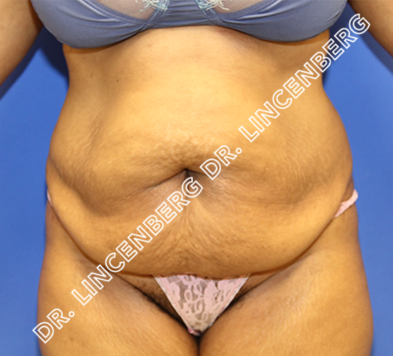
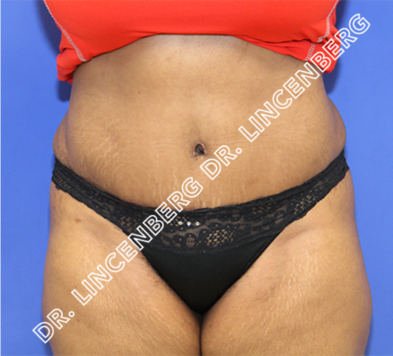
This 49-year-old African-American mother of 4 children wanted her flat stomach returned to her.
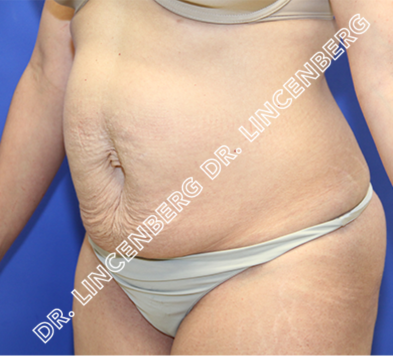
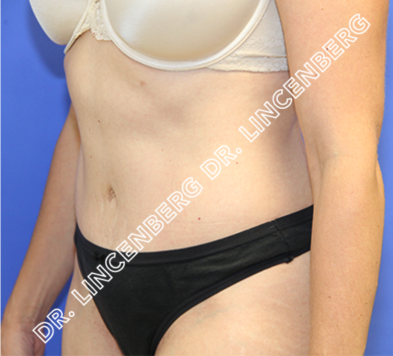
This 43-year-old mother, non-profit administrator, and athletic competitor had severe back pain that was relieved by repair of her abdominal muscles.
Am I a Good Candidate for a Tummy Tuck?
When you are considering a tummy tuck, you are likely focused more on the results than the procedure itself. However, it's important to keep in mind that a tummy tuck is a major surgical procedure. You need to know what the experience is going to be like, from the moment you decide to have it performed until the time that you are fully recovered from the surgery.
Making the Decision
The best candidate for a tummy tuck is a person who's tried to lose weight through diet and exercise but still isn't able to attain the body they're envisioning. Either due to pregnancy or heredity, they aren't able to shed the last few pounds or their skin has lost its elasticity. The best candidate also is one who will continue their diet and exercise after the surgery to maintain the tummy tuck without it stretching out due to weight gain.
If you feel that you are a good candidate for a tummy tuck, then make the decision to schedule a consultation appointment with Dr. Lincenberg.
What Happens During a Tummy Tuck Consultation?
At your tummy tuck consultation you will meet with Dr. Lincenberg. After hearing your goals for the procedure, he will determine what kind of work should be done on the three layers of tissue – the skin, the fat and the muscle – and what type of tummy tuck procedure will achieve the desired results.
Full tummy tucks work on all three tissue layers. Dr. Lincenberg will likely plan to use additional techniques such as liposuction, ultrasonic liposuction and/or endoscopy to remove some hard-to-lose fat to create a truly customized approach for your abdominal contouring.
You need to have an in-depth understanding of the surgery and a realistic expectation of the experience before you can make your final decision. Dr. Lincenberg will answer any questions you have about the procedure as well as review what you need to do to prepare for the procedure and what to expect during recovery.
Preparing for Your Tummy Tuck
In order to enjoy natural-looking, long-lasting results, you need to properly prepare for your tummy tuck. Here are several ways you can do that:
In the weeks leading up to the procedure, adopt a healthy lifestyle in order to prepare your body for surgery. If you smoke, you should plan to quit smoking completely at least four weeks before your surgery. Be sure to enjoy a healthy, well-balanced diet prior to your surgery and stay as hydrated as possible.
In the days leading up to your surgery, do not use aspirin, ibuprofen or other anti-inflammatory medications. These medications can increase the risk of bleeding or bruising during your surgery, so it is best to avoid them if at all possible.
You also will need to make logistical arrangements prior to your tummy tuck surgery. You are going to need someone to drive you to and from the facility, and you also may need someone to help care for you in the hours immediately following the surgery.

How Much Does a Tummy Tuck Cost in Atlanta?
Since a tummy tuck is a cosmetic surgery procedure, most patients will have to pay out-of-pocket to have it performed. Most insurance plans do not cover the costs of a tummy tuck procedure.
These tummy tuck prices are all inclusive. They include the surgeon’s fee, operating room fee, anesthesia fee, all pre- and post-appointments, and garments.
Average price ranges are:X
Full tummy tucks are $12,400 - $13,400
Mini tummy tucks are $7,800 - $8,000
Core tummy tucks are $14,800 - $15,200
Fleur-de-Lys tummy tucks priced at your consultation. Because of the massive weight loss, the surgeon needs to see where the extra skin in the abdominal and waist area is to determine how the surgery will be approached
Risks
As with any surgical procedure, there are some risks to having a tummy tuck. However, when you partner with a qualified cosmetic surgeon like Dr. Sheldon Lincenberg, you greatly reduce the risk of complications with this procedure.
Some of the risks of having a tummy tuck include:
Anesthesia complications
Excessive bleeding
Prolonged swelling
Infection
Visible scarring
The Facility
Tummy tucks are performed under general anesthesia and most often performed as an outpatient surgical procedure. Dr. Lincenberg will recommend facilities for you to consider for your procedure.
How Long Is Recovery After a Tummy Tuck?
Tummy tuck recovery occurs in three phases:
First Phase – This phase begins immediately following surgery. Muscles will be weak and you will be encouraged to walk leaning forward.
Second Phase – Known as the collagen construction period, this phase lasts about four weeks. Stomach muscles will hurt less. Changing positions will still hurt, and your full strength will not have returned. You can resume some light tasks and return to office-type work in about 10 days. After the full four weeks, you will be able to resume normal exercise, sports, and strenuous labor. You'll also begin our beautiful scar program by applying liquid medicines to your scar.
Third Phase – The final phase of recovery lasts up to one year. During this time, the core strengthens and swelling resolves.
-
The best time to get a tummy tuck is when you're at your normal weight, you have finished having children, and you are in good health. Being at a stable weight means you can maintain your weight without going on a strict diet or undergoing frequent, strenuous exercise. If you are planning for a future childbirth, you should wait until after childbirth to have your tummy tuck. Being in good health means controlling any medical conditions such as high blood pressure and eliminating nicotine use and exposure for six weeks before the surgery.
-
A perfect candidate for a tummy tuck is a person who's tried to lose weight through diet and exercise but still isn't able to attain the body they're envisioning. Either from pregnancy or hereditary means, they aren't able to shed the last few pounds or their skin has lost its elasticity. We can create the stomach of your dreams by performing a simple tummy tuck. A perfect candidate is one who will continue their diet and exercise after the surgery as well. During your consultation, Dr. Lincenberg will measure your stomach and talk with you about which tummy tuck procedure would work best for you. We can then instruct you on the process of the tummy tuck and what to do to continue keeping your stomach looking the way you want it to after you have the procedure.
-
Do you need a mini or a full tummy tuck? The navel is our guide to choosing a mini or a full tummy tuck, so by judging where you would like to enhance, we can decide which procedure would be better for you. A mini tummy tuck is generally considered when the loose skin on the tummy is below the navel. So if there is also loose skin on the upper tummy, a full tummy tuck would give you a better appearance.
The tummy has three layers of tissue that we can modify - the skin, the fat, and the muscles. The fat located below the navel or the sides of the tummy is reduced in both operations. A mini tummy tuck can be enhanced by removing fat above the navel. Significant loosening of the abdominal muscles from pregnancies or aging is a sign that a mini tummy tuck will not deliver the results that you deserve. Your muscles will need to be tightened from the bottom of the rib cage to the hips and will require a full tummy tuck. A mini tummy tuck is for tummies that only need work done below the navel, and a full tummy tuck is for patients who need the entire tummy enhanced.
-
As a general rule of thumb, I'll measure how tall and wide your tummy is and I'll preserve that amount of skin while removing the excess skin. Shapewise, the skin that is removed is contained within a football-shaped ellipse, drawn on your abdomen, with the points of the football at each of your hipbones. The lower curve of the football connects those two points and curves through the upper point of your mons hair zone. The upper curve of the football connects the ends through the belly button. The skin and the stretch marks within this football piece of skin will clearly be gone. The skin of your upper tummy is released so it can be drawn down to cover the whole tummy much like you're pulling down a window shade. At times, the football will be wider, wrapping around the sides of the tummy like the sides of an apron. It can also curve higher if there is a lot of upper tummy loose skin. Or the lower curve can dip into the mons hair to tighten the mons. For women with only a small amount of extra skin, the skin removal shape may resemble a quarter moon, more than a football. These markings are adjusted, removing the correct amount of skin for each individual. This creates a custom tummy tuck for you.
-
How long is the recovery after a tummy tuck? There are three phases. The first phase begins right after surgery. You will be encouraged to walk immediately, even though your stomach muscles will not allow you to stand up straight. By the third or fourth day, the stomach muscles will hurt less and you can walk upright. Phase two has been described as having less pain, although changing positions still hurts and your core strength is not yet normal. You can resume some light tasks and return to office-type work after ten days or so. You'll also begin our beautiful scar program by applying liquid medicines to your scar. The second phase is the collagen construction period and continues for about four weeks. After the month you can return to your normal exercise, playing sports, and doing manual labor. Phase three will then continue for up to a year. Your core will strengthen beyond its pre-surgery level. During this phase, the collagen cross-links and the swelling gradually resolves, and the pinkish color of the scar fades away. Many patients say they have better posture, less back pain, and of course, a body that looks thinner. Learn more in our video: Tummy Tuck Recovery.
-
Your scar begins to heal from day one following surgery. What you do from day one to day thirty has a greater following effect than what you do months later. My secret to creating beautiful scars start with a healthy diet and avoiding all types of nicotine. I seal all my surgical scars with several layers of sterile tape. And as soon as we remove the tape, we recommend applying a silicone cover to the scar. This could be in the form of a sheet of silicone or a silicone ointment. These topical medicines could also prevent dark pigmentation, thickened scar tissue, or prolonged inflammation. Remember, these methods to heal a scar require constant attention. There is a huge difference between scars that just heal on their own and ones that are taken care of every day. Learn more about scar care in our video: Minimizing Tummy Tuck Scars.
-
The pain of a tummy tuck is mostly caused by the tightening and repositioning of the abdominal muscles. This pain is most intense for the first 3-5 days but can last up to a month until your muscles accept their new position without talking back to you. The usual medicines to control this pain include narcotic analgesics and muscle relaxers. This is a time-tested method and is very effective, although there may be side effects of the medicines. Those side effects can include constipation, drowsiness, and confusion. There are two additional options that can add to pain control while allowing you to use less of the narcotics. One option is to place a pair of pain relief catheters over the rectus muscles so that long-acting local anesthetic can be delivered to the muscles themselves. The catheters are slipped out several days later. My patients have had very positive comments about this method. Another option is to spray a foamy long-acting narcotic over the muscles, just before the end of the surgery. Its also effective and lets you use fewer pain pills. Both options localize the medicine to the muscles themselves avoiding circulation to the brain and minimize the side effects of narcotic pills. Learn more in our video: Controlling Tummy Tuck Pain.
-
There are benefits of drains, but your surgery can be performed without them. A drain looks like a soft white plastic hose connected to a bulb. The bulb collects serum and blood sucked out of the surgical site like a vacuum sucks in dust. If the serum stays inside of you, it will form a puddle and keep the skin tissue from touching each other. If they don't touch, then they can't stick together. If they don't stick together then they won't begin to heal. By removing the serum, the tissue begins to stick together and start the healing process. The drainage is also a way of measuring the healing occurring under the skin. Drains, although effective, can be uncomfortable and hard to manage. Another option is to perform a no-drain procedure.
As I'm closing up the surgical area, I will stitch the two tissues together in a technique that has been likened to a quilted blanket. It will add time to the surgery, but we believe it is time well utilized. These points of attachment hold the layers in place and your body begins to heal before you awaken from anesthesia. Watch our video: No Drain Tummy Tuck to learn more.
FAQs About Tummy Tucks
Schedule Your Atlanta Tummy Tuck Consultation Today
If you feel that you are a good candidate for a tummy tuck and you are interested in learning more about this procedure, schedule a consultation with Dr. Sheldon Lincenberg today.